Growing Grapes From Cuttings
Grapes are very easy to grow from cuttings. With proper care, a dormant cutting can be started in the spring and by fall will give a vine large enough to bear a cluster or two of fruit the next season. The important factors are proper care and preparation of the cuttings.
Grapes can be grown from two types of cuttings, dormant or hardwood, and green cuttings. Dormant cuttings are the easiest to handle, but green cuttings work in situations when it isn't possible to use hardwood, such as for grapes that don't root easily from dormant cuttings, or when green cuttings are all that are available.
Dormant Cuttings
Dormant cuttings can be taken any time after the vine has lost it's leaves until the buds begin to swell in the spring. Cuttings are made from the new shoots (canes) that grew the growing season that just ended. The best wood is the first one to two feet of the base of the shoot where the buds are closest together, but any healthy, well matured section of the cane will suffice. Ideal thickness is pencil diameter up to about 3/4 inch thick. Thicker cuttings can be hard to handle and thinner wood may not be mature, though thinner wood may be acceptable if the variety has naturally small shoots. Avoid wood that is soft and spongy and has a large pith. Best wood is dense and light green inside with relatively small pith. (See Fig. 2) Cuttings should be 12 to 18 inches long, with the bottom cut off straight, right below the bud, and the top cut diagonally, at least 1/2 inch above the bud to make it easy to identify the top, insuring that the cutting will be planted right side up (See Fig. 1).
Fig. 1 - Dormant cuttings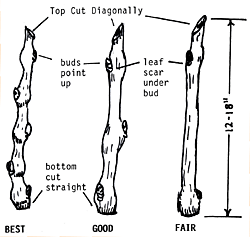
Fig. 1. A. Best dormant cutting, from base of cane, having 4 or more nodes (area where the bud is located). B. Good cutting, having at least 3 nodes. C. Fair cutting, having only 2 nodes, though suitable if cutting is otherwise healthy.
Some growers make the diagonal cut on the bottom. Either way works. There should be at least 3 buds (nodes) on the cutting, more if possible, though two bud cuttings may serve in an emergency (see fig. 2).
Fig. 2 - Cuttings, end view.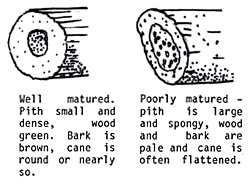
Fig. 2. A. Cross-section of poor cutting showing large, spongy pith, flattened cane, and poorly matured, yellowish wood. B. Cross-section of good, well-matured cutting showing small, tight pith in center, round cross-section and dense, light green wood.
Rooting occurs best at the nodes, hence the advantage in having several nodes per cutting.
If you take your own cuttings, choose clean, healthy wood with no discolorations from fungus or other disease, though fungus disease (black rot, downy and powdery mildew, and anthracnose) will not harm the cuttings if the wood well matured. Disinfect such cuttings with a 5% hydrogen peroxide solution before growing them, to keep disease from spreading into the nursery.
Try to observe the vine in bearing to be sure it is healthy - some virus diseases can reduce crop, allowing the vine to grow more, so it looks big and vigorous when dormant, but is unfruitful. Vines grown from cuttings of a virus-infected vine will also have the virus. If possible, take cuttings after there has been enough cold weather to kill any poorly ripened wood, to insure getting mature wood. Bundle the cuttings with plastic twine or insulated wire that won't rot or corrode and mark them with plastic or other rot-resistant material. Use metal or plastic tags with embossed letters or permanent ink that won't wash off in moist conditions.
Storing Cuttings
To store cuttings, wrap them in moist paper or pack them in material such as damp peat, in a plastic bag.
Keep cuttings refrigerated or stored in an unheated building, in the crawl space under the house. Avoid places where they will freeze. Freezing, per se will not harm them, but it can dry them. The ideal temperature is 32-33o F (0-1oC). Properly stored, cuttings can be held for as long as a year or more.
Large quantities of cuttings can also be stored by burying them in pits of sand (to prevent waterlogging) on the north side of a building. They are buried upside down with 6 -18 inches of sand over them, covered with tarps and boards. As spring arrives, some or most of the sand is removed so the bottoms of the cuttings warm first and callus in preparation for planting (see callusing).
Callusing
Callus is the white tissue that forms on cut surfaces of the cutting, and can also appear in lines along the sides of the cutting. It is from callus that roots form. (See Fig 3 & 4).
Fig. 3 - Cuttings ready to plant.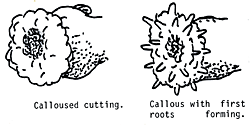
Fig. 3. A. Callus formation at bottom end of cutting, near the bud. B. Same callus a day or two later when roots begin to show.
Fig. 4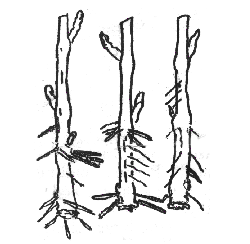
Callus may not always be obvious, but it must be there before roots develop. Once roots start, they grow in cooler conditions than are needed for callus to form. A grape cutting pushed into soil will just sit until the soil is warm enough for callus to form, so it usually only grows a few inches the first year. But by pre-callusing the cuttings before planting, they can grow much more than they would otherwise, often enough to establish the trunk of the vine, if not more.
A callused cutting planted in it's permanent location, kept weeded, watered, and well fertilized, can establish it's roots in place as it grows a top and can often grow enough to allow it to bear a cluster or two the next season. This has been done in commercial vineyards in Oregon. Nursery-grown bare root vines have to grow a year to re-establish their roots, before being trained up the second year, and can finally start to bear the third year, a full year after a cutting planted at the same time.
Before callusing, be sure cuttings haven't dried in storage. Standing them in an inch or two of water overnight will let them "refill," improving rooting.
There are several methods to callus cuttings, according to your situation. While rooting hormone isn't absolutely necessary, it can hasten callusing and increase the number of roots. A very good product for the purpose is Dip 'N' Grow (see sources) used at medium strength.
Method 1. Small amounts of cuttings can be callused by wrapping them in moist paper or sphagnum in a black plastic bag. This is the way your cuttings arrive, so if they have been stored properly, they are ready to callus. Put them in a warm area that stays constantly at 80-85oF. The top of a refrigerator is a good place as the waste heat from the condenser collects there. Callusing should occur in one to two weeks. Buds may push and produce white sprouts, but this isn't harmful, though care should be taken to avoid breakage as the cutting must use energy to grow more shoots. Plant as soon as the cuttings are callused and roots start to appear.
Method 2. Plant the cuttings in a pot of a mix of 3 parts perlite to 1 part peat, by volume. Set the pot on a heat mat set to 85 F (25 C), in a cool area, or even outdoors in a protected area. This heats the root zone and encourages callusing, but the top of the cuttings, being in cool air, will not push buds as readily. The idea is to get roots before buds push too much so there is an existing root system to support the new growth when it appears. Rooting occurs in one to two weeks in most cases. See sources for a company that sells heat mats.
Method 3. Plant the cuttings in a one gallon black pot of the 3:1 perlite-peat mix and set it in a sunny location where the pot can be warmed by the sun. The pot should be no larger than one gallon as the warming effect of the sun will penetrate a larger pot too slowly. Avoid excess watering as that will cool the mix and slow rooting. This is a slower method, often taking as much as a month, and the buds will often start to grow before the roots are formed, but it works well enough for home use.
Larger quantities of cuttings can be bundled in lots of 50 - 100 and rooted in the 3:1 perlite peat mix in benches with bottom heat (heat cables or hot water pipes) set at 80 - 85oF (25oC) in the root zone. Ideally, beds should be outdoors or in an unheated, or even refrigerated, room to retard sprouting of the buds while the cuttings callus and root, as in method #2. This reduces the likelihood of shoots that can break off during planting.
Planting
Cuttings callus and root in a short time, so don't start callusing until the planting site is ready so the cuttings can be planted immediately. Once cuttings have a ring of callus on the base, or roots are starting to appear, it's time to plant them.
Cuttings may be planted:
- directly in the spot where you plan to grow the vine;
- in a nursery row where you can grow them until fall, then transplant the vine when it is dormant;
- in a pot.
In the last case, you can start cuttings early in the year, then transplant them into their permanent location from the pot as spring advances, or even grow them in the pot all summer and set them out in the fall, if fall planting is possible in your area.
If you lack means to keep the young vines watered in the permanent location, it is better to grow vines in a nursery or pot and transplant them as dormant vines, which are able to take more stress when they are planted in the permanent location.
Plant cuttings with half or more of their length in the soil to help protect them from desiccation. In very hot, dry areas the cuttings can be covered with a mound of loose soil at first. Keep the soil loose and watch for buds breaking through. When buds start to grow, pull the soil mound away from them.
If some of the roots or shoots break during planting, it isn't a disaster, but avoid it if possible as the cutting must expend energy to grow more. If white shoots die or rot back a bit, new shoots will start from the base of the old shoot.
Water an inch or more a week until the shoots get to six inches long, then start using a weekly feeding of a balanced organic fertilizer, such as fish (mixed according to directions) or a liquid chemical fertilizer such as 16-16-16. Before the shoots are about 6 inches long, the roots are not developed well enough to get full benefit from fertilizer. If you use drip irrigation, the fertilizer can be applied in the water. Stop fertilizing by mid summer and reduce or stop water soon after that to allow the vine to harden before frost.
I have used mycorrhizal fungi with my grapes and find that these types of fungi, which associate with the roots and help the plant take up nutrients, are a definite benefit to the plants. They can be applied directly to the roots or watered in after planting. Applying them to the roots before planting seems to have the most effect. If you do use the fungi, stay with a strictly organic fertilizer as chemical types will inhibit or destroy the fungi. See sources for more information.
Green (softwood) Cuttings
Green cuttings are used mainly with grapes that do not root from dormant cuttings, such as varieties derived from Vitis lincecumii or V. aestivalis (such as "Norton"), or Muscadine grapes (Muscadinia rotundifolia), or when dormant cuttings are not available. Muscadine grapes started from green cuttings have a success rate of 70 to 80% versus 1 to 2 % from dormant cuttings. Green cuttings can also be used to multiply a variety quickly, as noted farther on.
Make green cuttings from any vigorously growing shoot. Avoid shoots that have stopped growing and are starting to harden off and turn brown. Take cuttings as early as possible in the spring to give the young vine extra time to harden off, unless you can keep the vine in a greenhouse. Cuttings should be 4 to 6 inches (10 to 15 cm) long, with two or three leaves. Remove all but the top leaf and cut that one in half if it is full size, but leave it alone if it is a young, undersized leaf (See Fig. 5). Cuttings with no leaves at all very seldom root.
Fig. 5 - Green cuttings.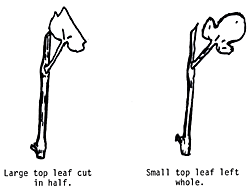
Fig. 5. A. green cutting having three nodes, with small leaf left intact. B. Green cutting with large leaf cut in half to reduce transpiration (water loss) from leaf surface.
Dip the green cutting in rooting hormone (see sources) and plant in the same 3:1 perlite peat mix used for dormant cuttings. The ideal place to plant is in mist bench with a heat cable in the bottom of it to hold temperatures at 85ºF (25ºC) in the root zone. Done this way, the cuttings will usually root in 6-9 days and be ready to pot up. Keep them under mist or in high humidity for a few days until the new roots can keep the plant from wilting. When held in a greenhouse and forced with extra fertilizer, the new vine can itself provide material for more cuttings within two or three weeks. With this system of using each new batch of rooted plants as sources of more material, a few cuttings can become thousands in six weeks.
A simpler alternative is to use a one gallon black plastic pot, with a clear plastic bag over it, supported by wires (see Fig 6)
Fig. 6 - Footing pot showing wires to support plastic bag.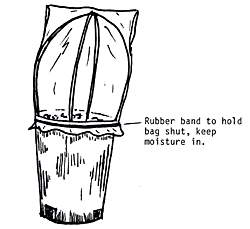
Fig. 6. Black plastic one gallon pot with plastic bag supported by wires, held on with rubber band, to form a humid chamber where green cuttings can be rooted.
This creates a humid chamber that keeps the cuttings from wilting until they root. If the pot is warmed by sunlight, rooting is slower since the pot cools at night and may take three weeks to a month. If the pot is sent on a heat mat, to keep the heat constant, rooting is faster.
Vines started from green cuttings need more protection when set in the vineyard and should be surrounded by a bottomless milk carton or other device to shade it until it can withstand direct sunlight.
Either way you do it, your new grapes will give you pleasure for as many years as you want.
On-Site Rooting of Cuttings
This is a shortcut method of rooting grape cuttings that several people have tried with enough success to make it worth posting here. Cuttings are rooted right in the place where the vines are to grow.
Note 1. Time of year. This method is done after all danger of frost is past and the weather is consistently warm.
Note 2. Site preparation. Till the soil at the site where the vines are to grow and clean off weeds.
- Step one. For each vine, put down a sheet of clear plastic mulch, 2 feet (1.25 Meter) by 2 feet (1.25 Meter) and secure the edges either by burying them. This is done a week before planting. Or use a continuous strip if you are planting a row.
- After a week, prepare the cuttings with an application of Dip 'N' Grow rooting hormone, diluted to the strength listed for "easy to root" plants.
- Push the cuttings through the plastic film at least half way into the soil.
- Within one to four weeks the cuttings should root and begin to push buds. It may take longer if the weather is cool. When shoots are at least six inches tall, the vines can be watered and fertilized with something mild like fish fertilizer, and then again on a regular basis after that.
- Train the shoots as they grow and with good care the vine should grow at least enough to produce a trunk by the end of the season. The plastic may be removed once the vines are at least a foot tall, and organic mulch put down in place of it. If you leave the plastic, be sure to remove it by the end of the season.
In this method, the clear plastic allows sunlight through to the soil,where its energy is converted to heat. The plastic traps the heat,warming the soil enough to help the cuttings form callus and roots. If the cuttings are planted where the mature vines are to be located, the new shoots can be trained up a support stake as they grow, so that the new vine may get big enough to bear a small crop the next season. The success of this method will vary with climate, soil, and grape variety.
Sources:
Mycorrhizal Fungi Sources:
Bio-Organics
Heat Mat
Grow For It
Phone: 1-800-662-5021
This heat mat is well suited to grape cuttings because it is set to a higher temperature and the amount of heat can be varied by how close the flat/pot is to the mat.
Rooting Hormone
Dip'N' Grow
Available in garden stores, or contact:
Astoria-Pacific, Inc.
Clackamas, OR 97015-0830
Phone: 1-800-536-3111
Fax: 503-655-7367
ZipSet Pots
Very nice system of paper pots and collapsable flats for rooting cuttings in combinations with the heat mat from GrowForIt. Pots can be left on the cuttings when planted. 2 x 2 x 6 inch pots work well with cuttings. These pots are available from:
The Monarch Company
Phone: 1-800-284-0390
Email: monarch@monarchmfg.com